HUMAN API.

THE WORKSHOP / FACILITATOR CERTIFICATION

Apply it.
Lead it.
Show it.

You’ve seen what the method can do. This is where you learn to take other people through it.

Applications are open Dates will be announced soon

Over sixteen weeks, in a small group, you carry three cases from first observation to final decision, with clinics, individual reviews and an observed session along the way. Meet the requirements and you become a Human API Certified Facilitator.

Applying starts a conversation and does not reserve a place. We confirm the schedule and enrollment terms with you before payment.

$3,500 per seat at launch · $4,500 standard. A seat is added to a Workshop purchase.

In the room
your turn at the board.
show how you used it.Brandon White · Founder, Human API
Small group sizeA cohort you’ll get to know
Sixteen weeksTime to do the work properly
Three distinct casesEach one a step further
Six 90-minute sessionsCohort learning and case clinics
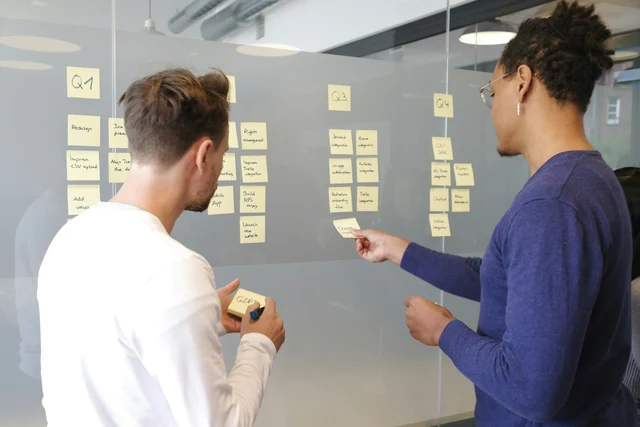
A group working through sticky notes on a glass wall
The cover of the Facilitator Deck included in the Workshop
the materials are already yours.

WHY A SEAT

The human part
of development.

A download can hand you the method. It can’t read your reasoning, sit in on your session or tell you what it saw.

A certification seat pays for that: people developing and assessing how you apply the method and facilitate with others. You carry out the case studies yourself. The cohort, case clinics and individual reviews support that work.

Real-world use cases are encouraged. The decisions, constraints and exceptions are where understanding becomes visible.

In the Workshop

  • The lessons and slides
  • Activity mats and records
  • Facilitator deck and guides
  • Paid client facilitation

Added by a seat

  • Clinics with your cohort
  • Individual review of each case
  • An observed live session
  • A documented readiness decision

Client facilitation follows the materials license. File resale is prohibited.

THREE CASES / INCREASING INDEPENDENCE

Each one,
a step further.

Show the reasoning from first observation to the decision about what happens next. The picture fills in as you go.

With support

Understandand apply.

Work through a real situation with help close by. Establish the evidence, map the work and explain your decisions, so it’s clear you understand the sequence and can use it.

start with your piece.
With others

Leadand reconcile.

Now there are other people in it. Hear individual concerns, compare the evidence, resolve or preserve the differences, and document the decisions and who owns them.

now it’s a room.
With independence

Lead itthrough.

Less support, more of it yours. Prepare, facilitate and define a useful test. Examine the result, establish follow-through and explain the limits of what you learned.

the whole picture.

WHAT A CASE HAS TO SHOW

Make the
reasoning visible.

A case can end in “keep,” “adjust” or “stop.” What matters is the quality of the evidence, judgment and facilitation. Yes, that means a change that failed can still be a very good case.

Your casereal work welcome

The starting picture

The situation, intended result, people and systems, your role, starting evidence and important unknowns.

The design decisions

Current and proposed process, full effort, effects on others, task allocation, ownership and handoffs. Any AI task has boundaries and tests.

The test and what followed

What you tested, what happened, the limits of the evidence, then updated instructions and the next review.

The decision
“we stopped it” can be a very good answer.

WHAT THE SEAT INCLUDES

Practice,
with feedback.

Small group size over sixteen weeks. Dates will be announced soon.

the shape of it, not the calendar. submission dates come at orientation.

Orientation & guidance

The pathway, evidence standard, case requirements and submission dates.

Six 90-minute sessions

Cohort learning and case clinics, including orientation and case discussion.

Three case studies

Distinct applications showing preparation, mapping, decisions, testing and follow-through.

Individual case review

One initial review and one revision review per case.

Observed facilitation

One assessed live facilitation segment per participant.

Final assessment

Portfolio review and a documented readiness decision.

Program support

Questions through the designated program channel during enrollment. Response arrangements are stated before enrollment.

Certification

Human API Certified Facilitator status when the requirements are met.

IN MOTION

See what
you’d be leading.

The method, the work and how they come together. Press play on any of them.

Follow the nine activities that turn a situation into a useful change. They’re the same nine you’ll take other people through.

start with this one.

WHO GETS CERTIFIED

People who help
people work.

If you’re already the person others bring the messy thing to, you’re in the right place.

Founders and solo professionals

You run it, so you already know where it sticks.
  • Small business founders
  • Independent professionals
  • People running a practice on their own

Start with your own operation. By the second case you’ll need other people in it: a client, a partner or a small crew.

Teams

The messy thing already lands on your desk.
  • Managers and team leads
  • Project and operations leads
  • The person everyone asks first

Bring the handoff, report or request your team keeps working around.
Organizations

You want the skill to stay when outside help leaves.
  • Internal improvement practitioners
  • Operations, people and learning leads
  • People coordinating across departments

Each seat goes to one person doing the work. Use information you’re authorized to share.
Facilitators and consultants

You already run the room.
  • Independent facilitators
  • Consultants and trainers
  • Anyone adding this method to client work

Your Workshop license already covers paid client facilitation. A seat adds the observation and assessment behind it.

Three things to check first.

Not sure about one of them? That’s what the first conversation is for.

Get certification details

How readiness builds.

  1. You participate, with evidence from your own work.
  2. You lead selected activities.
  3. You lead while observed.

Three workshops are a minimum learning path. Readiness also depends on the quality of your preparation, records, judgment and follow-through.

THE INVESTMENT

Materials. Practice.
Assessment.

Launch prices, with the standard price beside them. A seat is assigned to the person doing the work.

The Workshop

$1,495
launch · $2,495 standard

The learning and working materials. One complete download.

Look inside the Workshop ↗

Certification seat

$3,500
per person, launch · $4,500 standard

The practice, feedback and assessment. Added to a Workshop purchase.

Get certification details
the whole path.

Workshop + one seat

$4,995
launch · $6,995 standard

Everything above, for one person.

Get certification details

Pay before the cohort, or in two scheduled installments completed before the final assessment. Booking, completion and extension terms are provided before enrollment.

HOW TO APPLY

It starts with
a conversation.

Send your application.

The form opens with facilitator certification already selected. Tell us about the cases you could bring.

Talk it through.

The cases, the time involved and the next cohort.

Confirm before you pay.

Applying does not reserve a place. We confirm the schedule and enrollment terms with you before payment.

Human API · Facilitator certification

Ready to lead
the method?

Get the details on certification, the next cohort and whether it’s right for you.

A conversation is a good place to start.

We’ll email you about facilitator certification. This does not subscribe you to the newsletter or reserve a seat. Privacy

FAIR QUESTIONS

What the
assessment means.

When does the next cohort start?

Dates will be announced soon. Applications are open now, and we confirm the schedule and enrollment terms with you before payment.

Do I need certification to use the materials with clients?

No. Paid client facilitation is included in the Workshop materials license, and file resale is prohibited. The Workshop purchase does not confer certification. A seat adds the human feedback, observation and assessment behind it.

Does completing the labs lead to certification?

The two labs and capacity exercise support self-guided learning. Certification requires pathway enrollment and evidence that meets the assessment standard, including applying the method responsibly with others.

Can participants work together?

Yes, where appropriate. Each participant’s contribution, reasoning and readiness are assessed individually.

What happens if further work is needed?

The assessor identifies the gaps and further practice or evidence required. Each case includes one initial and one revision review. Any additional assessment, extensions or support follow the terms supplied before enrollment.

What does the certification recognize?

Human API issues this method-specific certification. It recognizes demonstrated ability to apply and facilitate the Human API method within the scope assessed. Certification, material-use and maintenance terms define how the status may be described and used.

Can I bring confidential material?

Use information you are authorized to share. Cases can use approved extracts, anonymized information or clearly marked simulations where needed.

Where can I find a certified facilitator?

The directory is coming soon. To have Human API facilitate in the meantime, explore business system workshops and other services.

ONE HUMAN. MORE CAPACITY.

Bring your practice.
Develop your judgment.

Talk through the cases you could bring, the time involved and the next cohort.

come show us how you used it.Get certification details Applications are open. Dates will be announced soon.

The P.R.A.C.T.I.C.A.L. method

Follow the nine activities that turn a situation into a useful change.

Read the transcript

A message arrives. Something has changed. Someone needs an answer. A decision you thought was settled needs your attention again. You find the conversation. Check the details. Ask another person. Explain what happened. By the time the work moves forward, something else has been waiting.

Sometimes, it’s another project. Sometimes, it’s someone at home. Sometimes, it’s you.

Our work and our lives are connected long before we find a way to connect the systems that support them. We carry the missing information. Remember the next step. Hold the pieces together. Until there’s very little room left.

The work keeps arriving. Decisions collect in one place. Attention moves back and forth. And capacity begins to slip away in the spaces between.

So where do we begin? With one situation. One piece we can pick up and understand.

That’s where Human API comes in. Our method is practical. A way to see what’s happening, work through the connections, and put a useful change into practice.

We begin by asking what needs to change. Pinpoint. That message keeps interrupting the day. What would a better outcome look like for the person asking, the person answering, and everyone waiting?

Then we look beneath the interruption. Root. Why does the same question keep coming back? Perhaps the answer lives in someone’s memory. Perhaps a responsibility was never clear. Perhaps the information changed, but the people doing the work never received it.

We follow the work far enough to understand. Audit. The search. The explanation. The waiting. The checking afterward. All of it takes something.

Now we can see more of the picture. Categorize. Which parts need human judgment? Which belong in a reliable process? Where could AI provide useful support? Each piece begins to find its place.

But a piece needs a connection. Transition. We make the handoff usable. The right information, a clear responsibility, and a next step someone can actually take.

Instruct. Where AI can help, we give it a bounded job. The context it needs, the limits it must respect, and a clear way for a person to check its work. Then we decide what to try.

Choose. One change. Someone responsible. A test we can learn from. We put it into practice.

And look again. Assess. Did the question reach the right person? Was the answer useful? Did we reduce the whole effort, including the checking and correction? What changed for the people involved?

Lock. We keep what the evidence supports. Record how it works. Make it available to the next person who needs it.

Piece by piece, a sequence is formed. Then we turn it around. The same pieces reveal a circle.

A decision affects a handoff. A handoff depends on information. What we learn changes the instructions, and sometimes the situation we thought we understood. We can return to any piece with a different perspective. That’s how the method stays useful as life changes.

And as the connections improve, there can be more room. Room to finish something thoughtfully. To respond without starting over. To leave work with less of it still running through your mind.

Greater capacity takes shape through the work we do together. In the Human API Workshop, you bring a situation from your own life or organization. You work through the pieces and build a change you can test. The picture becomes clearer. And we return to the question at its center.

What do you want greater capacity to make possible? You belong there. At the center of the systems you create. At home. At work. One human. More capacity. Human API.

What we do

See how the Workshop and working with Human API come together.

Read the transcript

There’s work we can see, the project, the meeting, the decision, and there’s the work of holding it all together, remembering what changed, finding the missing information, helping someone understand what happens next.

At home and at work, those connections take time, attention, and judgment. Often, they depend on a person caring more than anyone can see.

Human API helps people and teams understand that work and build systems that support the lives around it.

We begin with something real, a situation that keeps coming back, a responsibility that’s difficult to share, an idea you haven’t found room to put into practice.

Our method is practical. In the Human API Workshop, you bring that situation into view. Through the cards, working mats, conversations, and activities, you examine what’s happening, follow the connections, listen to another perspective.

You decide what needs a person’s judgment, what a reliable system can carry, and where AI has a useful role. Then you choose a change to test, put it into practice, look at what actually happened, and keep what the evidence supports.

As you work, the puzzle takes shape. First, a sequence. Then, a circle. The same pieces reveal connections you couldn’t see in the first arrangement. You leave with a change to test, and a method you can return to as your circumstances change.

And at the center, a question. What do you want greater capacity to make possible? That answer belongs to you. One human. More capacity. Human API.

Working with Human API

Read the transcript

Working with Human API

There comes a point when you know something could work differently.

You may have a clear idea of what you want to change.

Or you may only know that too much depends on you remembering, explaining, and finding a way through.

Sometimes, the business has grown. Sometimes, your responsibilities have changed. Sometimes, you can see an opportunity, but you haven't yet worked out how to make room for it.

Wherever you begin, there is a question worth asking.

What would useful support look like here?

At Human API, that is where the conversation starts.

With your circumstances. Your ambitions. The people involved. And the work you want to move forward.

Imagine you run a small business.

You know your customers. You know what a good day feels like. You have built something people rely on.

An appointment comes through one place. A customer asks a question somewhere else. An invoice needs updating. Tomorrow's schedule is still in your head.

You have tools for all of these things.

A calendar. An inbox. A payment system. A place to keep your records.

But you are still making the connections.

We would begin by looking at one part of the day with you. How a request arrives. What needs to be known. Who responds. What happens when the plan changes.

Perhaps the first improvement is a clearer way to collect information. Perhaps it is a reminder that happens automatically, or a shared process someone else can follow.

Where AI might help, we would identify a specific job and establish how its work will be checked.

The work could become a focused advisory session or a small implementation, with the scope agreed before it begins.

You should know what will change, what you need to contribute, and what you will be able to use afterward.

Now imagine a larger organization.

Sales knows what the customer was promised. The delivery team knows what is possible. Finance knows what has been agreed commercially.

Each has a part of the picture.

A change enters the conversation. One team updates its records. Another continues with the earlier version. Someone notices the difference and starts bringing everyone back together.

Here, the work may need several people in the room.

We help them describe what happens from their own perspective, then examine the connections together.

Where is the information maintained? Who can approve a change? What does the next team need before it can act?

A business system workshop creates space to work through those questions. Executive alignment may be needed when the decisions cross teams, priorities, or responsibilities.

The outcome could be an agreed process, clearer decision rights, and a defined change to test.

If that change needs building, implementation becomes its own piece of work, with agreed requirements and a way to decide whether it is ready.

The conversation becomes something people can carry into the working day.

An organization may begin somewhere else.

Its members are asking about AI.

Some are already experimenting. Others are unsure where to begin. They work in different organizations, with different resources and different levels of confidence.

A useful learning experience needs to meet them there.

We can work with the organization to shape training around the questions its members are actually asking.

What could this help me do? What information should I use? How do I recognize a result that needs correcting? Where does my judgment still matter?

A talk can introduce a way of thinking. Training can give people room to practise. A workshop can help them apply that learning to a situation of their own.

The format follows what people need to understand and do afterward.

An experienced manager and a first-time business owner may use different tools. They both need an explanation they can relate to their own work.

And sometimes, the work begins with one person.

You may be leading a team through a change. Taking on a new responsibility. Making a decision that affects other people.

There are options, expectations, and competing demands. You need somewhere to examine them carefully.

A focused working session can help with a particular decision. An advisory relationship can provide a regular place to review progress and work through what comes next.

Private coaching gives sustained attention to how you lead, decide, communicate, and carry responsibility.

The focus is agreed with you.

It might be a conversation you need to have. A responsibility you need to share. A way of making decisions you want to develop.

You bring your experience and judgment. We help create the conditions to examine them, practise, and move forward with greater clarity.

These situations ask for different kinds of support.

That is why we take time to understand the work before choosing the engagement.

We ask what is happening now. What you have already tried. What is worth preserving. What needs to become possible.

We listen to the people involved and look at the information available.

Then we agree the work in writing.

Who will participate. What you will prepare. What we will do together. What you will receive. And how we will review the result.

You should be able to picture the engagement before it starts.

Your existing tools are part of that picture.

For one business, work lives in Microsoft 365, a bookkeeping system, and a calendar.

For another, it moves between a customer platform, shared documents, and conversations across departments.

A team might plan in Miro, manage customer relationships in HubSpot or Salesforce, and communicate through Teams.

A small-business owner might create in Canva, take bookings online, and accept payments through Square or Stripe.

We begin by understanding what those tools do for you today.

What information they hold. Who uses them. Where the same task is repeated. Where a connection would help.

An improvement might involve using an existing feature more effectively, changing a shared practice, or building an integration where the systems and permissions allow it.

If a different tool is needed, the reason should be clear.

You should understand what it adds, what it costs, and what it will take to maintain.

AI belongs in that practical conversation.

It may help prepare a draft, organize information, or find relevant material in approved sources.

For each use, we define the task, the information it can use, and the boundaries around its actions.

We establish where a person reviews the result and what should happen when something is missing or uncertain.

Then we test it against the work it is meant to support.

A convincing demonstration is a beginning. People still need to understand how to use it, recognize a problem, and know where to go for help.

Learning is part of making the change work.

What you leave with depends on why you came.

For the business owner, it could be a working process and the confidence to share it.

For the team, a clearer agreement about information, decisions, and responsibility.

For the organization, a learning experience that helps members apply new ideas to their own circumstances.

For the leader, a considered next step and a way to review what happens after taking it.

Implementation includes the agreed testing and handover. Training includes opportunities to practise. Advisory and coaching return to the priorities established together.

Where follow-through is needed, we agree what it includes and who is responsible.

The work should remain useful after the session ends.

There is also a way to begin independently.

The Human API Workshop gives you the teaching and working materials to learn the method and apply it to a situation of your own.

You can start there, or work directly with us when you need facilitation, guidance, development, or implementation.

You do not need to arrive knowing which service to choose.

Bring the situation you want to improve.

The opportunity you want to explore.

The decision you need to make.

Tell us what is happening, and what you would like to become possible.

We will help you work out where to begin.

Human API.

One human. More capacity.

Facilitator certificationApplications are openGet certification details
Enlarged Human API material